


Table of Contents
Table of Contents

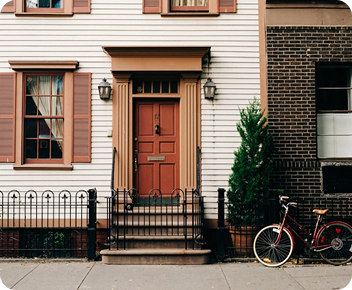


Oshawa offers a place to settle east of Toronto while staying connected to employment, education and amenities across the Greater Toronto Area. Located on Lake Ontario in Durham Region, the city has established residential neighbourhoods, waterfront recreation and a growing role as a centre for post-secondary education and healthcare.
For households comparing housing costs across the GTA, Oshawa remains a lower-priced option. Its combination of local services, highway access and GO Transit connections appeals to buyers who want to maintain ties to Toronto while considering a home farther east.
If you have the income to support your housing payments but need more time to save or improve your credit, rent-to-own can help turn your plans into a structured path toward purchasing a home.
Oshawa’s housing market recorded lower prices and fewer sales in September 2026 compared with a year earlier. According to WOWA’s September 2026 housing market report, the average home price was $679,861, down 8.2 percent year over year, although it increased 4.1 percent from August.
Detached homes averaged $748,346, a decline of 9.1 percent from September 2025. Semi-detached properties averaged $590,591, while freehold townhouses averaged $656,250. Condominium townhouses averaged $486,108, and condominium apartments averaged $301,786. This range gives buyers several price points to consider depending on the property type and space they need.
The benchmark price, which represents a typical home, was $699,700. Meanwhile, Oshawa recorded 125 residential transactions, down 28 percent year over year and 12.6 percent from August. Detached homes accounted for 89 of those sales, remaining the largest part of the local market.
There were 448 new listings during September and 660 active listings. With sales running below last year’s level, buyers have an opportunity to assess available homes carefully and negotiate terms that fit their budget.
Oshawa’s average price also remained below the September averages of $828,141 across Durham Region and $1,006,409 across the GTA, according to the same report. For families weighing the cost of buying against access to the Toronto area, that price difference remains one of Oshawa’s main attractions.

Highway 401 runs through Oshawa, providing a direct road connection to neighbouring Durham communities and Toronto. For residents who travel regularly for work, having both highway and rail options is a practical advantage.
Durham College Oshawa GO connects the city with the Lakeshore East line and Toronto’s Union Station. GO bus services provide additional regional connections, allowing commuters to plan around their destination and schedule.
Within Oshawa and the surrounding region, Durham Region Transit operates local and regional bus services, including PULSE routes. Connections between DRT and GO Transit help residents reach shopping, schools and workplaces without relying entirely on a car.
When comparing neighbourhoods, consider the complete trip from your front door to work or school, including access to stations, parking and any transfers.

Oshawa’s automotive history remains central to its identity, but its economy now includes a broader mix of healthcare, education, advanced manufacturing, technology and professional services. This gives residents employment options within the city as well as across Durham Region and the GTA.
Healthcare and research are particularly important to the city’s development. Lakeridge Health and the health sciences programs at local post-secondary institutions contribute to clinical services, training and research. The Queen’s University Lakeridge Health MD Family Medicine Program adds another connection between medical education and local healthcare.
Ontario Tech University, Durham College and Trent University Durham GTA also help develop skills for industries such as engineering, information technology, business and health sciences. Their presence supports Oshawa’s role as both a place to study and a place to build a career.
Families in Oshawa have access to elementary and secondary education through the Durham District School Board and Durham Catholic District School Board. French-language public and Catholic school options are also available within Durham Region.
Post-secondary choices are a significant part of the city’s appeal. Ontario Tech University offers undergraduate and graduate education, with strengths in technology, engineering, sciences and other professional fields. Durham College provides applied education and career-focused training, while Trent University Durham GTA offers university programs at its Oshawa campus.
For households planning a long-term move, these institutions provide opportunities for children to continue their studies locally and for adults to return to education as their careers develop.
A lower purchase price than other GTA markets can make Oshawa appealing, but finding an affordable property is only part of becoming a homeowner. You also need savings, suitable financing and a home that works for your household.
Rent-to-own brings these steps together. With an approved property and agreement in place, you can live in the home while building your down payment and preparing for a mortgage.
Suppose your target home costs $400,000, but you need another two years to become mortgage-ready. You have two options:
With a regular rental, you pay for accommodation while saving for your purchase separately. Your lease does not normally establish a future purchase price or give you the right to buy the home.
If prices increased by 10 percent annually, a $400,000 home would cost $484,000 after two years. You would need to prepare for a purchase price that had risen by $84,000 while continuing to meet your savings goal.
The property itself may also be unavailable when you are ready. A landlord could choose to keep renting it, or a home you had considered buying could sell to someone else. Mortgage approval might therefore be followed by another search, a new neighbourhood and another move.
For an eligible location and property approved by Requity Homes, the program establishes your future purchase pricing before you move in. Your monthly payment includes rent and a separate savings contribution toward your down payment.
Requity Homes’ published pricing includes a 5 percent annual increase. Using a 5 percent annual compounded increase, the same $400,000 home would have an agreed purchase price of $441,000 after two years. That is $43,000 below the purchase price in the 10 percent growth scenario above.
The arrangement also gives your preparation a specific purpose. You know which home you are working toward purchasing, and regular savings contributions become part of your monthly housing plan. During that time, you can address credit issues and prepare your finances for a mortgage application.
Once you qualify for financing and complete the purchase, you can remain in the home you have already made part of your life.

Our biggest obstacle was being a new small business. We didn't qualify with any major banks to get a mortgage.
Business owners who overcome mortgage challenges of entering homeownership in Sault Ste. Marie
Requity Homes helps eligible buyers work toward homeownership when they need additional time before obtaining a traditional mortgage. The program combines a qualifying property, agreed purchase pricing and monthly down payment savings.
Start by speaking with the team to confirm whether your preferred Oshawa location and property qualify. Requity Homes assesses applications and homes against its program requirements, helping establish a realistic budget before the home search begins.
You can use the rent-to-own payment calculator to estimate monthly payments or read the beginner’s guide to rent-to-own for more information about the process.
Get pre-qualified with Requity Homes and take the first step toward a home purchase plan.


Rent your dream home while we help you save for a down payment.


Alberta
Rent-to-Own Homes in AirdrieRent-to-Own Homes in BeaumontRent-to-Own Homes in EdmontonRent-to-Own Homes in Grande PrairieRent-to-Own Homes in LeducRent-to-Own Homes in LethbridgeRent-to-Own Homes in Red DeerRent-to-Own Homes in Sherwood ParkRent-to-Own Homes in Spruce GroveRent-to-Own Homes in St. AlbertRent-to-Own Homes in Stony PlainRent-to-Own in Alberta
Rent-to-Own in AirdrieRent-to-Own in BeaumontRent-to-Own in CalgaryRent-to-Own in EdmontonRent-to-Own in Grande PrairieRent-to-Own in LeducRent-to-Own in LethbridgeRent-to-Own in LloydminsterRent-to-Own in Red DeerRent-to-Own in Sherwood ParkRent-to-Own in Spruce GroveRent-to-Own in St. AlbertRent-to-Own in Stony PlainOshawa offers a place to settle east of Toronto while staying connected to employment, education and amenities across the Greater Toronto Area. Located on Lake Ontario in Durham Region, the city has established residential neighbourhoods, waterfront recreation and a growing role as a centre for post-secondary education and healthcare.
For households comparing housing costs across the GTA, Oshawa remains a lower-priced option. Its combination of local services, highway access and GO Transit connections appeals to buyers who want to maintain ties to Toronto while considering a home farther east.
If you have the income to support your housing payments but need more time to save or improve your credit, rent-to-own can help turn your plans into a structured path toward purchasing a home.
Oshawa’s housing market recorded lower prices and fewer sales in September 2026 compared with a year earlier. According to WOWA’s September 2026 housing market report, the average home price was $679,861, down 8.2 percent year over year, although it increased 4.1 percent from August.
Detached homes averaged $748,346, a decline of 9.1 percent from September 2025. Semi-detached properties averaged $590,591, while freehold townhouses averaged $656,250. Condominium townhouses averaged $486,108, and condominium apartments averaged $301,786. This range gives buyers several price points to consider depending on the property type and space they need.
The benchmark price, which represents a typical home, was $699,700. Meanwhile, Oshawa recorded 125 residential transactions, down 28 percent year over year and 12.6 percent from August. Detached homes accounted for 89 of those sales, remaining the largest part of the local market.
There were 448 new listings during September and 660 active listings. With sales running below last year’s level, buyers have an opportunity to assess available homes carefully and negotiate terms that fit their budget.
Oshawa’s average price also remained below the September averages of $828,141 across Durham Region and $1,006,409 across the GTA, according to the same report. For families weighing the cost of buying against access to the Toronto area, that price difference remains one of Oshawa’s main attractions.
Highway 401 runs through Oshawa, providing a direct road connection to neighbouring Durham communities and Toronto. For residents who travel regularly for work, having both highway and rail options is a practical advantage.
Durham College Oshawa GO connects the city with the Lakeshore East line and Toronto’s Union Station. GO bus services provide additional regional connections, allowing commuters to plan around their destination and schedule.
Within Oshawa and the surrounding region, Durham Region Transit operates local and regional bus services, including PULSE routes. Connections between DRT and GO Transit help residents reach shopping, schools and workplaces without relying entirely on a car.
When comparing neighbourhoods, consider the complete trip from your front door to work or school, including access to stations, parking and any transfers.
Oshawa’s automotive history remains central to its identity, but its economy now includes a broader mix of healthcare, education, advanced manufacturing, technology and professional services. This gives residents employment options within the city as well as across Durham Region and the GTA.
Healthcare and research are particularly important to the city’s development. Lakeridge Health and the health sciences programs at local post-secondary institutions contribute to clinical services, training and research. The Queen’s University Lakeridge Health MD Family Medicine Program adds another connection between medical education and local healthcare.
Ontario Tech University, Durham College and Trent University Durham GTA also help develop skills for industries such as engineering, information technology, business and health sciences. Their presence supports Oshawa’s role as both a place to study and a place to build a career.
Families in Oshawa have access to elementary and secondary education through the Durham District School Board and Durham Catholic District School Board. French-language public and Catholic school options are also available within Durham Region.
Post-secondary choices are a significant part of the city’s appeal. Ontario Tech University offers undergraduate and graduate education, with strengths in technology, engineering, sciences and other professional fields. Durham College provides applied education and career-focused training, while Trent University Durham GTA offers university programs at its Oshawa campus.
For households planning a long-term move, these institutions provide opportunities for children to continue their studies locally and for adults to return to education as their careers develop.
A lower purchase price than other GTA markets can make Oshawa appealing, but finding an affordable property is only part of becoming a homeowner. You also need savings, suitable financing and a home that works for your household.
Rent-to-own brings these steps together. With an approved property and agreement in place, you can live in the home while building your down payment and preparing for a mortgage.
Suppose your target home costs $400,000, but you need another two years to become mortgage-ready. You have two options:
With a regular rental, you pay for accommodation while saving for your purchase separately. Your lease does not normally establish a future purchase price or give you the right to buy the home.
If prices increased by 10 percent annually, a $400,000 home would cost $484,000 after two years. You would need to prepare for a purchase price that had risen by $84,000 while continuing to meet your savings goal.
The property itself may also be unavailable when you are ready. A landlord could choose to keep renting it, or a home you had considered buying could sell to someone else. Mortgage approval might therefore be followed by another search, a new neighbourhood and another move.
For an eligible location and property approved by Requity Homes, the program establishes your future purchase pricing before you move in. Your monthly payment includes rent and a separate savings contribution toward your down payment.
Requity Homes’ published pricing includes a 5 percent annual increase. Using a 5 percent annual compounded increase, the same $400,000 home would have an agreed purchase price of $441,000 after two years. That is $43,000 below the purchase price in the 10 percent growth scenario above.
The arrangement also gives your preparation a specific purpose. You know which home you are working toward purchasing, and regular savings contributions become part of your monthly housing plan. During that time, you can address credit issues and prepare your finances for a mortgage application.
Once you qualify for financing and complete the purchase, you can remain in the home you have already made part of your life.
Our biggest obstacle was being a new small business. We didn't qualify with any major banks to get a mortgage.
Business owners who overcome mortgage challenges of entering homeownership in Sault Ste. Marie
Requity Homes helps eligible buyers work toward homeownership when they need additional time before obtaining a traditional mortgage. The program combines a qualifying property, agreed purchase pricing and monthly down payment savings.
Start by speaking with the team to confirm whether your preferred Oshawa location and property qualify. Requity Homes assesses applications and homes against its program requirements, helping establish a realistic budget before the home search begins.
You can use the rent-to-own payment calculator to estimate monthly payments or read the beginner’s guide to rent-to-own for more information about the process.
Get pre-qualified with Requity Homes and take the first step toward a home purchase plan.


